2024 CETRA Fall Lecture by Tristan Leperlier: “The Plurilingual Local at Large” (28 November 2024 – ONLINE)

The 2024 CETRA Fall Lecture is cross-programmed as the opening keynote lecture of the international conference ‘Book translation in multilingual states (1945-2024)‘, organised by CETRA board member Elke Brems and the members of the BELTRANS project.

You are kindly invited to digitally attend the 2024 CETRA Fall Lecture by Dr. Tristan Leperlier (CNRS), “The Plurilingual Local at Large“, to be held on 28 November 2024 starting at 10:00 am (Central European Standard Time). The lecture will be live-streamed from the opening session of the international conference ‘Book translation in multilingual states (1945-2024)‘. A recording of the lecture will also be published on CETRA’s YouTube channel following the event.

Online attendance is free but registration is required via this link: https://shorturl.at/O6o8E. (Once on the registration page, select 28 November 2024 from the calendar, add ‘1’ to the category ‘Online participants’, and click ‘Add to shopping cart’. Your registration entitles you to remotely attend all sessions of the conference, including the CETRA Fall Lecture.)

The Plurilingual Local at Large

Lecture abstract

This lecture aims to bridge the gaps between three research trends in translation studies and the sociology of the international circulation of literature. The first trend involves studying literary translations across cultures and countries; the second interrogates literary circulations that occur without translation in international linguistic areas; the third focuses on literary exchanges within a single country.

The objective of this lecture is to understand how local and global linguistic power relations interact. I will first unravel the linguistic power dynamics within a local plurilingual literature (Algeria), in original languages as well as through translations. As I will show, these relations are fundamentally marked by the transnational structure of the local literary field. I will then focus on the international circulation of literature itself: first in original languages within international linguistic areas, in particular in the francophone one; then in English translation in the USA. Broadening the scope, I will take into account the “Maghrebi literature” in circulation. It includes the literature of three former French colonies (Morocco, Algeria, Tunisia) that share similar plurilingual configurations, utilizing Arabic (standard and dialectal), French, and secondarily Tamazight and English as languages of literary creation.

Through statistical analysis and interviews with writers, translators, editors, and literary agents in Algeria, France and the USA, my lecture seeks to explore how local hierarchies, based on languages, countries, but also gender, are reconfigured as a consequence of international circulation, and subsequently impact local dynamics back in the Maghreb. Secondarily, the communication will broaden the classical understanding of multilingual states by considering the American literary field as a plurilingual literary space where translations from the Maghreb are part of the American literary market, and competing in particular with Arab-American literature.

Speaker bio

Tristan Leperlier is a tenured researcher at the French CNRS. A sociologist of literature, he specializes in plurilingualism and transnationalism, particularly in post-colonial contexts, with a focus on North Africa. He is currently a Global Fellow with the Marie Skłodowska-Curie Actions of the European Union. He is the author of Algérie, Les écrivains dans la décennie noire (CNRS Editions, 2018).

Invitation: Celebratory symposium on the occasion of Peter Flynn’s recent book ‘Translating in the Local Community’ (3 December 2024)

CETRA is pleased to spread the word about the open invitation for this upcoming in-person event, which comes to us from CETRA research team member, An Van Hecke.

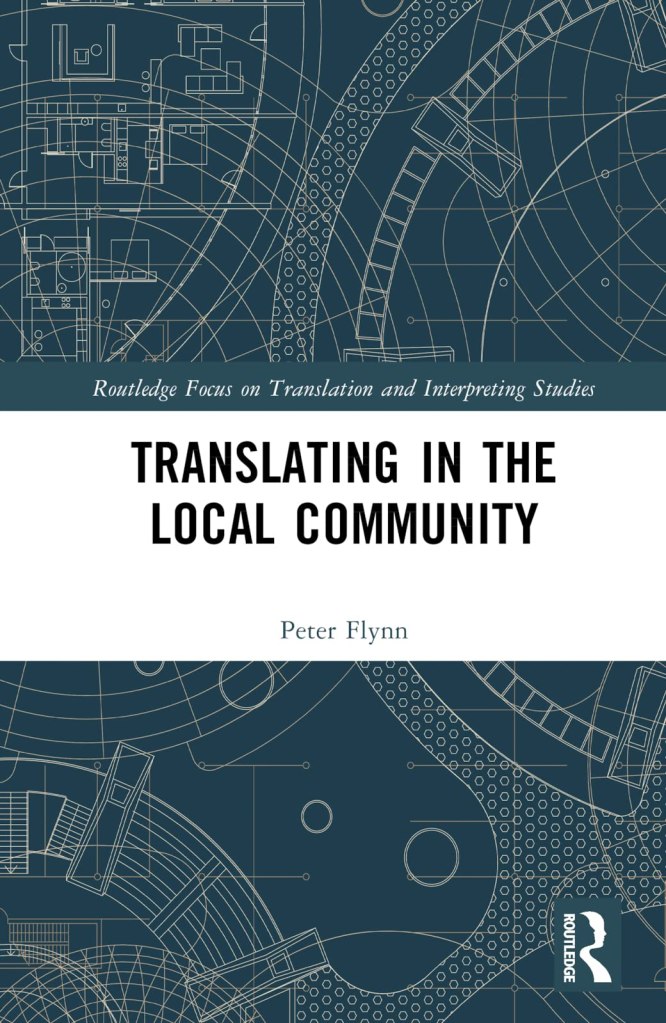
Last year, Routledge published a remarkable book, Translating in the Local Community, by professor emeritus and CETRA teaching staff member Peter Flynn. This publication is the culmination of years of meticulous and dedicated research into multilingualism in the superdiverse city of Ghent, Belgium. Peter builds on work in translation studies, sociolinguistics, linguistic ethnography and anthropology to offer a translational perspective on scholarship on multilingualism and translation. Each chapter comprises a different multilingual site, ranging from schools to eateries to public transport, and unpacks specific dimensions of translation practices within and against constantly shifting multilingual settings. The book also reflects on socio-political factors and methodological considerations of concern when undertaking such an approach. Taken together, the chapters provide a composite picture of translation in a multilingual city, demonstrating how tracing physical, linguistic and social trajectories of movement in these contexts can deepen our understanding of the contemporary dynamics of multilingualism and natural translation and of translanguaging, more broadly.

We are delighted to invite you to the presentation of Peter’s book, which will take place on Tuesday, 3 December 2024, at 14:00, in the auditorium at Campus Opera, KU Leuven – Antwerp (Jezusstraat 28/30, 2000 Antwerp).

Attendance is free, but registration is required. Please register by 25 November 2024 via email to lieve.behiels@kuleuven.be.

The book presentation by Peter will be accompanied by reflections from his colleagues:

Priscilla Heynderickx: Welcoming remarks
Peter Flynn:
Happenstance and chain lighting
Alexandra Sanchez:
Fiestas latinas à la belge
Hilde Van Belle:
Charleston-ton-ton
Lieve Behiels:
Let’s Zing Ensemble
Wim Schramme:
Taal is fun
Heidi Verplaetse:
Transcreating ads and public information in the public space
Elke Brems:
A Brussels Blessing
Antoon Cox:
The role of humour and laughter in linguistically diverse clinical settings – a recommended poem
Peter Flynn:
Concluding remarks

All attendees are kindly invited to enjoy a reception after the symposium.

Call for book chapters: ‘Translation and Interpreting Processes: Extended Perspectives’ (deadline for abstracts 1 February 2025)

Edited volume in the CETRA book series Translation, Interpreting and Mediation (Leuven University Press)

Guest editors: Susana Schoer Granado (University of Salamanca), Phillippa May Bennett (University of Coimbra) and Jiaqi Liu (University of Manchester)

Statement of Aims 

Recent scholarship has increasingly approached, reframed and studied translation and interpreting as a situated, material phenomenon. In this conceptual framework, the various roles within translation and interpreting are seen not only as situated in specific temporal and spatial contexts, but also as deeply entrenched in genuine working contexts, environments, and interactions. Such a focus challenges the traditional emphasis on individuals and texts in translation process research and invites researchers to broaden their analyses to examine individuals and collectives embedded in their particular social and material realities. Recent academic discourse seems to advocate for a renewed focus on the relational, material, and collective dimensions of the translation process. This shifts focus away from the archetype of translators as solitary decision-makers and instead seeks to show how they operate within a complex network of interactions. 

Examples of this new understanding of processes can be traced in several new strands of research. Workplace studies (Angelone et al., 2019) reveal how ‘things’ are used and how stakeholders negotiate in environments with people and objects. Littau (2016) emphasises the agency of objects in translation, viewing translation as a material and mediated practice shaped by object properties, with objects as ‘agentic actors’ alongside humans. Sociological approaches highlight the networked nature of translation, where relationships are critical to cognitive practices (Abdallah and Koskinen, 2007; Buzelin, 2005, 2007). Network methods like actor-network theory (Latour, 2007) analyse translation dynamics, revealing reciprocal effects and negotiations. Olohan (2019, 2021) develops a practice-theoretical approach, proposing a ‘practical epistemology’ where knowledge emerges in specific contexts, embedded in dynamic social practices and inseparable from the knower and the practice. 

These theoretical advances highlight significant progress in translation studies and the need to reassess translation and interpreting processes, demonstrating the field’s interdisciplinary potential. The pioneering ‘4EA’ cognition framework—embodied, embedded, enactive, extended, and affective—integrates cognitive science into translation studies and emphasizes that cognitive processes extend beyond the mind to include interactions with the body, tools, and environment. Hanna Risku, a principal advocate of the 4EA perspective, invites scholars to rethink translation process research along these lines. 

Building on Risku’s work and informed by the line of research developed in Ehrensberger-Dow & Hunziker Heeb (2016), Ehrensberger-Dow & Massey (2019), Koskinen (2008), Muñoz Martín (2017, 2020), Olohan (2019), Risku (2014, 2017), and Risku & Windhager (2015), this volume

aims to advance our understanding of translation and interpreting processes from an extended perspective, offering new methodological and conceptual insights and exploring new empirical domains. The introductory chapter to this volume will be written by Hanna Risku. 

How can we employ these (and other perspectives) in translation to further our understanding of what translation is and can be? We welcome proposals for conceptual papers, case studies, and empirical research contributions inspired by one or more of the following questions: 

  • How can theoretical perspectives—such as actor-network theory, activity theory, complexity theory, social network theory, and practice theory—enrich, complement, or challenge our understanding of translation and interpreting? 
  • How might the key concepts in translation studies be re-examined or redefined?
  • How can these concepts be unpacked within an increasingly technology-driven translation ecosystem? How might this re-examination contribute to a more nuanced understanding of common elements across different translation settings, such as tools, contexts, and paratexts? 
  • What key challenges does an extended view of translation reveal in terms of research methods and methodologies? 
  • What methods most effectively capture the dynamics of increasingly digitalised and globally distributed translation workflows? How can these methods complement each other, and what problems or boundaries should be addressed? 
  • How are translation workplaces evolving? How do workplace and institutional elements affect translation and interpreting practices? 
  • How do socio-technical systems and tools mediate the work of translators and interpreters across different domains? How is translator agency distributed among human and non-human actors in complex translation ecosystems? 

To propose a paper, please send your abstract (500 words, excluding references and author bio) via this Google Forms document: https://forms.gle/pY8ZLNwuZqoB65H78 

Submissions will only be accepted via Google Forms. Any questions regarding submissions should be addressed to: extendedperspectives@gmail.com  

Important dates 
  • 1 February 2025 – Abstract submission deadline (500 words) and author bio (300 words)
  • 30 April 2025 – Notification of acceptance 
  • 30 September 2025 – Chapter submission deadline (8000 words, including notes and references) 
  • Autumn 2026 – Estimated publication
Selected bibliography 

Beer, R. D. (2014). Dynamical systems and embedded cognition. In K. Frankish, & W. M. Ramsey (Eds.), The Cambridge handbook of artificial intelligence (pp. 128– 150). Cambridge: Cambridge University Press. 

Ehrensberger‐Dow, M. (2014). Challenges of translation process research at the workplace. MonTI Special Issue – Minding Translation, 7(Special Issue 1), 355–383. https://doi.org/10.6035/MonTI.2014.ne1.12 

Ehrensberger-Dow, M., & Hunziker Heeb, A. (2016). Investigating the ergonomics of a technologised translation workplace. In R. Muñoz Martín (Ed.), Reembedding translation process research (pp. 69–87). John Benjamins. https://doi.org/10.1075/btl.128.04ehr 

Ehrensberger-Dow, M., & Massey, G. (2019). Socio-technical issues in professional translation practice. In H. Risku, R. Rogl, & J. Milošević (Eds.), Translation practice in the field: Current research on socio-cognitive processes (pp. 105–122). John Benjamins. https://doi.org/10.1075/bct.105.06ehr 

Halverson, S. L., & Muñoz Martín, R. (2020). The times, they are a’changin: Multilingual mediated communication and cognition. In R. Munõz Martín & S. L. Halverson (Eds.), Multilingual mediated communication and cognition (IATIS Yearbook series). Routledge. 

Koskinen, K. (2008). Translating institutions: An ethnographic study of EU translation. Routledge. https://doi.org/10.4324/9781315759760 

Milošević, J.,& Risku, H. (2020). Situated cognition and the ethnographic study of translation processes: Translation scholars as outsiders, consultants and passionate participants. Linguistica Antverpiensia, New Series: Themes in Translation Studies, 19, 111–131 

Muñoz Martín, R. (2016) Reembedding translation process research: An introduction. In R. Muñoz Martín (Ed.), Reembedding translation process research (pp. 1–20). John Benjamins. https://doi.org/10.1075/btl.128.01mun 

Muñoz Martín, R. (2017). Looking toward the future of Cognitive Translation Studies. In J. W. Schwieter & A. Ferreira (Eds.), The handbook of translation and cognition (pp. 555–571). Wiley-Blackwell. https://doi.org/10.1002/9781119241485.ch30 

Risku, Hanna & Rogl, Regina (2022): Praxis and process meet halfway: The convergence of sociological and cognitive approaches in translation studies. Translation & Interpreting: The International Journal of Translation and Interpreting Research 14:2, 32–49. https://www.trans-int.org/index.php/transint/article/view/1355

Risku, Hanna & Rogl, Regina (2021): Translation and situated, embodied, distributed, embedded and extended cognition. In: Jakobsen, Arnt Lykke & Alves, Fabio (eds.): The Routledge Handbook of Translation and Cognition. London: Routledge, 478-499. 

Risku, Hanna & Windhager, Florian (2015): Extended Translation. A Socio-cognitive Research Agenda. In: Ehrensberger-Dow, Maureen; Göpferich, Susanne & O’Brien, Sharon (eds.): Interdisciplinarity in Translation and Interpreting Process Research. Amsterdam: Benjamins, 35–47. 

Risku, Hanna (2014): Translation Process Research as Interaction Research: From Mental to Socio-Cognitive Processes. MonTI – Monographs in Translation and Interpreting 7:2, 331–353. https://www.e-revistes.uji.es/index.php/monti/article/view/1711/1494 

Risku, Hanna; Windhager, Florian & Apfelthaler, Matthias (2013): A dynamic network model of translatorial cognition and action. Translation Spaces 2, 151–182.

Call for papers: “Polyphony and Silence” interdisciplinary symposium, 15-16 May 2025 (Leuven, Belgium)

CETRA is pleased to share the following call for papers with the CETRA community, which comes to us from CETRA staff member Núria Codina Solà and her colleagues at COLLAB – Collaborative Practices of Making Literature in Contexts of Displacement and Migration.

Polyphony and Silence: Counter-hegemonic writing practices, migration, and multilingualism

Call for papers 

Keynote: Professor Shahram Khosravi (Stockholm University)

Convenors:  Marialena Avgerinou (marialena.avgerinou@kuleuven.be) and Sonja Faaren Ruud (sonjafaaren.ruud@kuleuven.be

Polyphony and silence are concepts that refer to sonority and voice, as multitude or as absence. While they may seem to be in opposition to each other, both can be counter-hegemonic tools for writing against monolingual and ethno-nationalist imaginaries – in political movements, in literature and the arts, in institutions, in media, and in everyday life. We use the concept of polyphony to highlight the political significance of maintaining difference in unity, and silence to emphasize the importance of omitting, refusing, and listening. This symposium aims to bring together reflections on these practices, foregrounding texts and political initiatives by writers with multiple belongings, in diaspora, and with minoritized linguistic backgrounds. We focus on migration and language as axes by which the nation-state system constructs imaginaries of (un)belonging – which in turn give rise to solidarities that contest nationalist framings. 

Questions of voice and the power to narrate have long animated critical debate and theorization across academic disciplines, illuminating the ways in which hegemonic political and representational regimes within racial capitalism repress and appropriate the voices of (post)colonial, migrant, indigenous, racialized, and otherwise marginalized subjects (Said 1978; Spivak 1988; Trouillot 1995). In this context, works by subaltern individuals and groups to (re)assert voice and carve out spaces for a multiplicity of diverse voices can be acts of subversion. However, as Adania Shibli illustrates in rich and diverse ways in her writings set in Palestine, silence can also be a place of refuge and a powerful tool of resistance to colonial forces (Shibli 2002, 2006, 2017). 

Deriving from the Greek word (πολυφωνία) meaning “many voices,” polyphony migrated from music to literary analysis in Bakhtin’s work on Dostoyevsky (1984), centering the idea of dialogue and de-centering the authorial (monophonic) voice of the singular narrator. Research on literary and translation practices emphasizes the involvement of actors beyond those formally recognized as “authors” (Stillinger 1991) and explores the ways in which translators’ voices enter into translated texts (Herman 1996). The concept of polyphony has also been applied in diverse ways in the social sciences, for example to denote modes of ethnographic writing (Clifford & Marcus 1986) and to frame anthropological research as an intersubjective process, highlighting the importance of listening (Tsing 2015). Thinking from these interdisciplinary perspectives about polyphony as the interplay of voices invites us to consider questions such as: How is difference balanced with unity in political and creative practices? What are the possibilities and challenges of collaborative research methods? What (divisions of) labor do these practices entail? How is polyphony used as a tool of expression by writers and artists to produce multivocal (co)creations?

Complementing rather than contradicting these logics, silence does not just apply to repressive acts but also denotes a range of writing tactics for countering nationalist logics. In this line of reasoning, we ask: how is silence used as a tool to contest power structures, tropes, and colonial logics of “knowing” and representing Others? How does silence function as a space of listening? Critiquing the ways in which “uncritical appeals to voice” can serve to replicate colonial dynamics, Ferrari proposes viewing silence as “a fecund source of radical meaning-making” (2020, 130 &133). In contexts in which asylum seekers are obliged to recount their experiences to “legitimize” their claims in the eyes of the state, silence or tactical omission can be a tool of resistance, especially when acts of speaking (or writing) outside of socially accepted discourses leave them vulnerable to persecution. In critical migration studies, silence is also posited as an ethical choice by researchers who seek to avoid reproducing reductive narratives or exposing resistance tactics. Drawing from Glissant (1997), Khosravi discusses the idea of a “right to opacity” against “the colonizer’s demand for knowability” (2024, 7) and advocates “the refusal of academic reproduction of descriptive migrant objecthood” (Ibid, 2). Similarly, as work in translation studies shows, choices of whether and how to translate are not neutral but politically charged (Spivak 2000) and embracing “untranslatability” (Apter 2014) can be a mode of subverting language hierarchies and the commodification of cultural singularity. In multilingual literary performances, choosing not to translate can push the audience to pay more attention to sensory dynamics, such as sounds and bodies, which evoke different affective responses and elicit different modes of understanding. Finally, silence also regards the task of the recipients, the readers or listeners of a language or experience they might not know, constituting a positive space where understanding and solidarity may be formed: as put by poet Fady Joudah, “the space in which a Palestinian speaks and others listen” (2024). 

For this symposium, we seek to bring together scholars from across academic disciplines as well as writers, artists, and activists whose work engages with these themes. We encourage participation from junior scholars as well as presentations of works-in-progress. Interventions may take the form of empirical, methodological, or theoretical reflections as well as artistic engagements with the symposium themes. Possible topics include: 

  • Collaborative writing practices (literary, academic, political)
  • Writers’ collectives  
  • Migrant justice movements’ writing 
  • Self- and co-translation practices  
  • Non-translation and untranslatability 
  • Writing as (polyphonic) labor  
  • Literary writing and political mobilizing  
  • Literary activism  
  • Multimodal literary practices (spoken word, zines, audiovisual creation) 
  • Writing and unwriting as refusal 
  • Multilingualism and modes of understanding through and beyond language 

We welcome proposals from a variety of fields both from the humanities and the social sciences, in line with our interdisciplinary composition and approach, including but not limited to:  

  • Literary History 
  • Postcolonial Literature and Decolonialism 
  • Comparative Literature 
  • Literary and Critical Translation  
  • Political Theory and Social Movements 
  • Sociology of Literature and Translation
  • Multilingualism Studies and Linguistic Anthropology 
  • Anthropology of Migration and Mobility 
  • Anthropology of Literature 
  • Aesthetics
  • Narratology 
  • Cultural Studies  

Submission guidelines: 

  1. Submit a description of maximum 250 words of your proposed contribution (paper or artistic intervention) to collab@kuleuven.be by 6 December 2024.
  2. You will receive a confirmation email letting you know that we have received your application.
  3. We will reach out by 20 December 2024 once we have made our decision. 

Please don’t hesitate to contact us if you have any questions about this process, including questions about symposium accessibility. 

Dates to remember  

  • Call for contributions: 21 October 2024 – 6 December 2024 
  • Submission Deadline: 6 December 2024 by 11:59pm CEST 
  • Decision Date: 20 December 2024 
  • Symposium: 15-16 May 2025, Leuven (Belgium) 

Organizing committee: Marialena Avgerinou, Anna Sofia Churchill, Núria Codina Solà, Joana Roqué Pesquer, Sonja Faaren Ruud

image

The symposium is part of the ERC Starting Grant project COLLAB, which looks at Collaborative Practices of Making Literature in Contexts of Migration and Displacement (PI Núria Codina).

Call for papers: “Popular Fiction in Translation: An International Conference”, 10-12 September 2025 (Ghent, Belgium)

CETRA is pleased to share the following call for papers with the CETRA community, which comes to us from CETRA Class of 2024 alumna Jo De Brie, a doctoral researcher at Ghent University, and her supervisor Bram Lambrecht.

Keynote speakers: Hélène Buzelin (Université de Montréal) & Ting Guo (The University of Liverpool)

A quick look at UNESCO’s Index Translationum shows that authors of popular fiction are among the most translated of all times and all languages—from British crime writer Agatha Christie and the author of French adventure novels Jules Verne to “the Queen of Romance” Barbara Cartland and bestselling multi-talent Stephen King. The prominence of such writers in the Index Translationum shows the intense transnational circulation of popular fiction, ever since it emerged in the late eighteenth century. Throughout this period, interlingual translations have often gone hand in hand with intermedial adaptations, from feuilleton to novel to movie to videogame to merchandising.

Despite the obvious importance of translations for the international circulation and success of popular fiction, the history, institutions, agents, and discursive strategies of popular fiction in translation remain underexplored. While popular culture has become an established object of enquiry in cultural, literary, and media studies, scholars such as Bianchi & Zanettin (2018), Carter (2018), and Buzelin (2022) have recently pointed to translation studies’ tenacious preference for literary texts that are considered highbrow. This lack of attention to popular genres in literary translation studies, and to processes of translation in popular fiction studies, has been criticized by Hélène Buzelin, who advocates for “a more inclusive sociology of translation.”

The Belgian research groups TRACE (Translation and Culture) and CLIV (Centre for Literature in Translation/Centrum voor literatuur in vertaling) aim to contribute to such an inclusive approach to translated literature and culture. With an international conference entitled Popular Fiction in Translation, both research groups seek to bring together scholars in translation studies, literary studies, cultural studies, and other related fields that study the circulation of popular fiction across borders and languages from the 19th century to the present day. The genres gathered under the umbrella of “popular fiction” or “genre fiction” are multifarious and continuously metamorphosing and blending. We therefore encourage contributions on a wide array of popular genres and practices, comprising historical novels, crime fiction, romance, westerns, horror, fantasy, science fiction, chicklit, and many more.

The organizing and scientific committee especially welcomes proposals for papers on topics including (but not limited to):

  • the institutions, actors, and agents of popular fiction in translation, e.g. translation policies of publishing houses; the perspectives and working conditions of translators of popular fiction; practices of “fanslation” and “fansubbing” and group translation in popular culture; the role of AI in popular translation industries.
  • the history of popular fiction in translation, e.g. the importance of translations to genre history; historical translators and translators’ archives; cultural histories of popular fiction in translation; culture-specific items (CSI) in translated popular fiction.
  • the media of popular fiction in translation, e.g. the interplay between translation and adaptation in popular culture; media history (including histories of popular novels, installments, movies, TV series, streaming platforms and their translations); audiovisual translation and subtitling.
  • narratological approaches to popular fiction in translation, e.g. the impact of translation on characterization, narrative space, or narrative structure; translation from the perspective of cognitive narratology, rhetorical narratology, and other subfields in the theory of narrative.
  • popular fiction and worldviews in translation, e.g. translation from the perspective of ideology critique; feminist, queer, post/decolonial approaches to popular fiction in translation.

Submission guidelines

  • Please provide an abstract of max. 2500 characters (including references), a provisional title, and a short bionote (max. 1000 characters) before 15 January 2025.

Submit abstract

  • All presentations will be in English, while the research presented can focus on any geographical or linguistic context.
  • Online presentations will not be accommodated.
  • Submissions welcome for:
    – individual presentations (20 min.)
    – thematic panels (3 participants, 20 min. each)
  • You will receive a notification of acceptance by 15 February 2025.
  • Participation in the conference will imply a registration fee, with a special discount for PhD students.

References

Baldo, M., Evans, J., & Guo, T. (2023). Introduction of the special issue on ‘Translating the queer popular’. Perspectives31(2), 165-171.

Bianchi, D., & Zanettin, F. (2018). ‘Under surveillance’. An introduction to popular fiction in translation. Perspectives, 26(6), 793-808. https://doi.org/10.1080/0907676X.2018.1510017

Bianchi, D., & D’Arcangelo, A. (2015). Translating history or romance? Historical romantic fiction and its translation in a globalised market. Linguistics and literature studies3(5), 248-253.

Buzelin, H. (2022). What ever happened to the belles infidèles?: Elements for a more inclusive sociology of literary translation. Translation in society, 1(2), 224-250. https://doi.org/10.1075/tris.22020.buz

Campbell, I. (Ed.) (2021). Science fiction in translation: Perspectives on the global theory and practice of translation. Palgrave Macmillan.

Carter, E. (2018). Translating popular fiction. In S.-A. Harding & O. Carbonell Cortés (Eds.), The Routledge handbook of translation and culture (pp. 431-444). Routledge. https://doi.org/10.4324/9781315670898

Gelder, K. (2020). Adapting bestsellers: Fantasy, franchise and the afterlife of storyworlds. Cambridge University Press. https://doi.org/10.1017/9781108589604

Letourneux, M. (2017). Fictions à la chaîne : Littérature sérielle et culture médiatique. Seuil.

McCaw, N. (2011). Adapting detective fiction: Crime, Englishness and the TV detectives. Bloomsbury Publishing.

Piipponen, M., Mäntymäki, H., & Rodi-Risberg, M. (2020). Transnational crime fiction: Mobility, borders and detection. Springer International Publishing. https://books.google.be/books?id=8aOVzQEACAAJ

Seago, K. (2014). Introduction and overview: crime (fiction) in translation. The journal of specialised translation, July 2014(22), 2 – 14.

Woodstein, B. J. (2022). Translation and genre. Cambridge University Press. https://doi.org/10.1017/9781108923255

Call for papers: ‘Script-switching in literary texts’ (online colloquium)

CETRA is pleased to share the following call for papers with the CETRA community, which comes to us from Marianna Deganutti, a researcher at the Slovak Academy of Bratislava and a co-founder of LangueFlow, an international research group focusing on multilingual literature.

Call for papers

Writing has literally changed the course of human history. The relationship between language and script is profoundly influenced by political, cultural, economic, social and historical forces, which affect the invention, adoption, development, transfer and adaptation of writing systems; conversely, understanding writing systems offers invaluable insights into these dynamics as well as human creativity.

This interplay is especially relevant in the realm of literature, where scripts can be strategically employed to achieve among others political, linguistic, stylistic and narratological functions.

Our aim is to approach literary heterographics in a wide range of literary traditions and languages. Two or more scripts can be used within a text (e.g. Tolstoy, Eliot, Pound, H. Rider Haggard, Mingya Powles, Ståhlberg), or the text can be translated into other scripts than the one(s) it was originally written in (e.g. translation of works written in Cyrillic into the Latin script), or there may be other options for script-switching (compare with code-switching) and multiscriptism (compare with multilingualism).

Literary application of multiple scripts is the focus of our one-day online colloquium planned for Friday, 14 March 2025. We invite concise (max. 15 minutes) discussion-inspiring contributions addressing the phenomenon of script-switching and its subtler implications, including the functions and motivations of these practices, analysis of the visual aspects, challenges for translators, editors, publishers and readers, etc. We especially encourage young scholars to participate.

Please send your abstract before 31 October 2024 of maximum 200 words with three scientific questions and a short (up to 50 words) bio to Dr. Marianna Deganutti, e-mail: marianna.deganutti // at // savba.sk with a copy to zerocodeswitching // at // pm.me.

Please note that no certificate of attendance will be issued to participants.

Polyglot art: S. Ståhlberg

Organizers

  • Prof. Johanna Domokos, Bielefeld University and Károli Gáspár University Budapest, LangueFlow
  • Dr. Marianna Deganutti, Slovak Academy of Sciences, LangueFlow
  • Dr. Jana-Katharina Mende, Martin Luther University Halle-Wittenberg, LangueFlow
  • Dr. Sabira Ståhlberg, Independent Scholar, LangueFlow

Selected Bibliography

  • Helena Bodin, “Heterographics as a Literary Device: Auditory, Visual, and Cultural Features.” Journal of World Literature 3 (2018): 196-216.
  • – “Seeking Byzantium on the Borders of Narration, Identity, Space and Time in Julia Kristeva’s novel Murder in Byzantium.” Nordlit 24 (2009), 31–43.
  • David Damrosch, “Scriptworlds: Writing Systems and the Formation of World Literature.” Modern Language Quarterly 68(2), (2007), 195–219.
  • Ernest Fenollosa, Ezra Pound, Haun Saussy, Jonathan Stalling, and Lucas Klein (eds.), The Chinese Written Character as a Medium of for Poetry: A Critical Edition. New York, NY: Fordham University Press, 2008.
  • Rainier Grutman, “The Missing Link: Modeling Readers of Multilingual Writing.” Journal of Literary Multilingualism, 1 (1), 2023: 15–36.
  • Julie Hansen, Reading Novels. Translingually. Twenty – First – Century Case Studies. Boston: Academic Studies Press, 2024.
  • Mark Huss, “Inscribed gestures: the vernacular-cosmopolitan dynamic of sign language in Michael Roes’s novel Die Laute.” Textual Practice, 34:5, (2020): 803–819.
  • Charles Lock, “Heterographics: Towards a History and Theory of Other Lettering,” in Literary Translation: World Literature or ‘Worlding’ Literature?, Ida Klitgard (ed.). Copenhagen: Museum Tusculanum Press, 2006, 97–112.
  • – “On roman letters and other stories: An essay in heterographics.” Journal of World Literature1(2) 2016, 158–72.
  • Meira Polliack, “Dual-Script Mixed-Code Literary Sources from the Cairo Genizah”, in S. Schmidtke and G. Kiraz (eds.) Intellectual History of the Islamicate World 7, 2019: 325–350.
  • Markus Schiegg, Lena Sowada, “Script switching in nineteenth-century lower-class German handwriting.” Paedagogica Historica55(6), 2019. 772–791.
  • Mark Sebba et all. (eds.) Language Mixing and Code-Switching in Writing: Approaches to Mixed-Language Written Discourse. New York and London: Routledge 2012.
  • Giustina Selvelli, The Alphabet of Discord – The Ideologization of Writing Systems on the Balkans since the Breakup of Multiethnic Empire. Stuttgart: ibidem, 2021.
  • Szilvia Sövegjártó, Márton Vér (eds.), Exploring Multilingualism and Multiscriptism in Written Artefacts. Berlin: De Gruyter, 2024.
  • Sabira Ståhlberg, “Desert/ed Trail: A Journey into Unknown, Forgotten and Lost Languages in Eurasia,” in M. Deganutti, J. Domokos and J. Mudriczki (eds.), Code-Switching in Arts. Budapest: L’Harmattan-Károli Books, 2023: 223-234.
  • Philippa Steele (eds.), Understanding relations between scripts: the Aegean writing systems. Oxford; Philadelphia: Oxbow Books, 2017.
  • Judy Wakabayashi, “Script as a Factor in Translation.” Journal of World Literature, 1(2), 2016: 173-194.

CETRA Chair Professor 2024 Lecture Series by Lynne Bowker – Now available on YouTube

We are thrilled to announce that the recordings of the 2024 CETRA Chair Professor Lectures, delivered by Lynne Bowker (Université Laval), are now available on CETRA’s YouTube channel.

Professor Bowker delivered five lectures as part of the 2024 CETRA Research Summer School in Translation Studies, held in Antwerp from 19-30 August:

Whether you’re a scholar, practitioner, or student of translation, these lectures offer valuable perspectives on how technology is shaping the future of translation and communication – and the roles translation studies scholars can and should play in ensuring that this future is ethical, equitable and accessible.

Check out CETRA’s YouTube channel for Lynne Bowker’s lectures as well as others by past Chair Professors.

Lynne Bowker is Canada Research Chair in Translation, Technologies, and Society at the Université Laval in Quebec. Her principal research areas include translation technologies, language for special purposes, and scholarly and science communication. Prior to her professorship in Ottawa, she was a lecturer at Dublin City University in Ireland. In addition, she has held visiting positions as a guest professor or researcher at several institutions including the University of Verona, Tampere University, and the Adam Mickiewicz University.

In 2020, Professor Bowker was elected as a Fellow of the Royal Society of Canada (Academy of Arts and Humanities) in recognition of her contribution to research in translation and translation technologies. She is a member of groups such as the Canadian Association for Translation Studies, the COST Action Language in the Human-Machine Era (LITHME) and the Observatoire international sur les impacts sociétaux de l’IA et du numérique (OBVIA), as well as a certified (French-English) translator with the Association of Translators and Interpreters of Ontario. Her research has been funded by the Social Sciences and Humanities Research Council of Canada. Her recent publications include Machine Translation and Global Research (Emerald, 2019), and De-Mystifying Translation: Introducing Translation to Non-Translators (Routledge, 2023). For further information on her research activities and publications, see ORCID.

Job opportunity: Research manager Leuven Interdisciplinary Language Institute (LILI)

CETRA is pleased to share the following job opportunity with the CETRA community, which comes to us from CETRA board member Heidi Salaets:

This job posting is available in Dutch and English.

The Leuven Interdisciplinary Language Institute (LILI) is a newly established platform for the development and support of interdisciplinary research and education around language. By bringing together researchers from KU Leuven’s three science groups, LILI aims to put language firmly and sustainably on the agenda of interdisciplinary research and public debate on major societal challenges, such as the role of language in a hyper-diverse society, the relationship between language and power, the use of large language models, etc. In addition, the institute also wants to build a strong impact network with societal actors from different domains in order to respond to questions from practitioners and set up a process of knowledge co-creation. With the establishment of LILI, KU Leuven aims to take a leading position internationally and become a strong pole of attraction for scholars and students engaged in the study of language. 

Unit website

Responsibilities

For the start-up and sustainable development of the institute, LILI is looking for a research manager, who, together with the Board of Directors and the institute’s steering committee, will set the strategic lines and help realize LILI’s mission. The research manager will be jointly responsible for the organizational and management activities of the institute, as well as for increasing its (international) visibility, organizing networking opportunities, setting up new research collaborations and support in attracting (international) research funding on behalf of LILI.

The research manager’s duties include:

  • Facilitating interdisciplinary contacts among the institute’s members and with external research partners, through the organization of lecture series, symposia, brainstorming sessions and matchmaking events, among others
  • Identifying potential funding opportunities for interdisciplinary research
  • Actively supporting project proposals from LILI members
  • Developing a training offer for (young) researchers with a distinctly interdisciplinary profile, via summer/winter schools and training modules, e.g. in the form of micro-credentials
  • Stimulating transdisciplinary cooperation with social and industrial partners, e.g. by setting up an impact network and organizing network events
  • Expanding LILI as a broad center of expertise that actively contributes to the public debate on language

Profile

Given the broad scope of the institute, involving a large number of research disciplines represented at KU Leuven (across the three science groups), and the strong focus on transdisciplinary collaboration with non-academic partners, the research manager to be appointed will preferably have relevant experience in setting up and managing interdisciplinary projects with consortia of different sizes.

Candidate research managers of LILI ideally match the following profile description:

  • You have a PhD in a field connected to LILI’s research priorities
  • You have a strong affinity with language (research)
  • You have experience with interdisciplinary research and are able to see connections between various scientific disciplines
  • You have good management skills and relevant experience with (some of) the tasks described in the above job description
  • You have excellent communication skills and are able to build an (international) network of contacts with academic and non-academic partners
  • You have a high language proficiency level for Dutch and English.

Offer

  • Appointment as a postdoctoral collaborator (scale 44 – doctor-assistant) for a period of three years, renewable once
  • Upon request, a part-time appointment (80%) is negotiable
  • You will have a varied and challenging mandate in a dynamic team of researchers from various fields. The mandate offers growth opportunities and the chance to take on greater responsibility within the team.

Interested?

For more information please contact Prof. dr. Geert Brône, tel.: +32 3 502 15 16, mail: geert.brone@kuleuven.be or Prof. dr. Karen Lahousse, tel.: +32 16 32 48 16, mail: karen.lahousse@kuleuven.be.

You can apply for this job no later than October 01, 2024 via the  online application tool 

KU Leuven strives for an inclusive, respectful and socially safe environment. We embrace diversity among individuals and groups as an asset. Open dialogue and differences in perspective are essential for an ambitious research and educational environment. In our commitment to equal opportunity, we recognize the consequences of historical inequalities. We do not accept any form of discrimination based on, but not limited to, gender identity and expression, sexual orientation, age, ethnic or national background, skin colour, religious and philosophical diversity, neurodivergence, employment disability, health, or socioeconomic status. For questions about accessibility or support offered, we are happy to assist you at this email address.

Do you have a question about the online application system? Please consult our FAQ or email us at apply@kuleuven.be

Job opportunity: Full-time PhD researcher studying paratextual representations of translators within francophone literatures (Ghent University, deadline 30 June 2024)

CETRA is pleased to share the following job opportunity with the CETRA community, which comes to us from CETRA staff member Francis Mus:

This job posting is available in Dutch, English and French.

Job description

This vacancy concerns a full-time PhD project to be conducted at the Department of Translation, Interpreting and Communication at Ghent University, Belgium. This PhD research forms part of a larger project focusing on translations and paratexts. Specifically, the successful candidate will be studying paratextual representations of translators within francophone literatures. The main research objective is to explore how translators are represented, both by themselves and by other stakeholders, including authors, editors and critics, both in peritexts (e.g. forewords and afterwords in books) and in epitexts (e.g. reviews, interviews, websites, etc.). The central research question is how translators construct, combine and/or are assigned multiple roles and identities across several types of discourse? The research will predominantly concentrate on the modern period (19th century – the present day), with French featuring as either source or target language. Within this linguistic-temporal framework, there is considerable flexibility regarding the choice of authors, translators, and texts to be analysed. Also, if you will be studying a contemporary body of works, the scope of the research may include interviews with authors, translators, publishers and other literary agents. 

Your research will be embedded in the activities of the TRACE-CLIV research group. The team is mainly based in Ghent and works in close collaboration with other research groups, both inside and outside of Ghent University (CCROC, CERES, CETRA, TRICS, CIRTI). While the research of its members covers a wide range of topics, it is usually situated on the intersection of literary studies and translation studies. 

Your job responsibilities:

  • Within a timespan of four years, you will write a PhD dissertation dealing with paratextual representations of translators in francophone literatures.
  • You will share and disseminate your ideas and interim research results through high-quality publications in scholarly journals or books, as well as through presentations at international conferences or workshops.
  • You are keen to contribute to initiatives aimed at sharing your research with a wider audience.
  • You are open to collaborating with other PhD students inside and outside Ghent University who work on parallel and complementary research projects. 

In addition to your core research duties, you will actively contribute to the educational mission of our institution by providing (limited) support for courses within the field of (literary) translation studies. In addition, you will have the opportunity to take on a mentoring role by supervising master’s theses related to the subject of your PhD. 

Job offer:

We offer the opportunity to conduct this research in an international and stimulating environment. Ghent University consistently ranks among the best 100 universities in the world. Located in the heart of Europe, Ghent is a beautiful and welcoming city offering a wealth of cultural and leisure activities.

  • You will work under the supervision of Prof. Francis Mus. Your working hours are flexible, and working from home is possible.
  • Your immediate research context is the TRACE and CLIV research groups. You can also rely on good contacts with colleagues from other research groups, both within and outside of Ghent University. Throughout your journey, you can rely on guidance from a doctoral committee.
  • Administratively, you will be part of the department’s French section, which is responsible for teaching French subjects in the department’s bachelor’s and master’s programmes.
  • Your appointment is ideally scheduled to commence on 1 September 2024, although another starting date can be arranged upon consultation.
  • Initially, the successful candidate will be offered a one-year contract, followed by an evaluation. After a positive assessment, the contract will be extended for an additional three years.
  • The fellowship amount is 100% of the net salary of an AAP member in equal family circumstances. The individual fellowship amount is determined by the Department of Personnel and Organization based on family status and seniority. A grant that meets the conditions and criteria of the regulations for doctoral fellowships is considered free of personal income tax. Click here for more information about our salary scales
  • The successful candidate will enjoy some of the benefits that Ghent University offers (such as a wide range of courses, reimbursement of your commute and eco vouchers). For a complete overview of employee benefits at Ghent University, see http://www.ugent.be/nl/vacatures/personnel benefits.htm;

Job profile

We are looking for a highly creative and motivated PhD student with the following qualifications and skills:

  • You have (or will obtain before the starting date, i.e., a few months after application) a (European) master’s degree relevant for the research project (e.g. languages, literature, translation, cultural studies) with excellent (‘honours’-level) grades.
  • You are familiar with the main methodologies and theoretical references in literary translation studies and comparative literature.
  • You have strong analytical skills to interpret the research material.
  • You are capable of working independently, possess organisational qualities and are a team player.
  • Your command of English and French – both written and spoken – is fluent. Proficiency in Dutch will be deemed an asset, particularly for practical collaboration purposes.

How to apply

Send your application by e-mail to prof. Francis Mus (francis.mus@ugent.be), with the subject ‘Application: PhD paratexts’. 

Applications (one pdf-file) should include:

  • A motivation letter in Dutch, French or English, highlighting why you believe you are a suitable candidate for this PhD project and why you want this position;
  • An academic/professional resume, including a transcript of your study results;
  • A short overview describing your earlier research or technical work (e.g., scientific papers, master thesis, report on project work, etc.). Note: This may deviate from the topic of the advertised position;
  • One sample text of your academic research until now (e.g. article, one chapter of your MA thesis, etc.);
  • At least two reference contacts. 

After a first screening, selected candidates will be invited for an interview (in person or remotely via MS Teams). 

Application deadline: June 30, 2024. 
Start of the Ph.D. research: September-October 2024

Job opportunity: Postdoctoral fellowship in translation studies and digital humanities (Université de Liège / Centre d’études Simenon)

CETRA is pleased to share the following job opportunity with the CETRA community, which comes to us from CETRA staff member Maud Gonne:

Dear colleagues,

The Centre interdisciplinaire de recherche en traduction et en interprétation of the University of Liège, in collaboration with the Centre d’études Simenon, is looking for a Postdoctoral Fellow in Translation Studies and Digital Humanities for a period of twenty months starting on 1 September 2024. Deadline to apply is 31 May 2024. Please find all details in the call for applications below.

Please feel free to circulate this job opportunity through your scientific network.

Thanks in advance,

Céline Letawe and Maud Gonne